

You bought a box of "memory" supplements after forgetting an appointment, struggling to find a simple word at work, or re-reading the same message three times. Then you realized that your nights have been poor for months, your coffee intake has increased, and your days are spent almost entirely sitting down. Before blaming your brain, look at your routine.
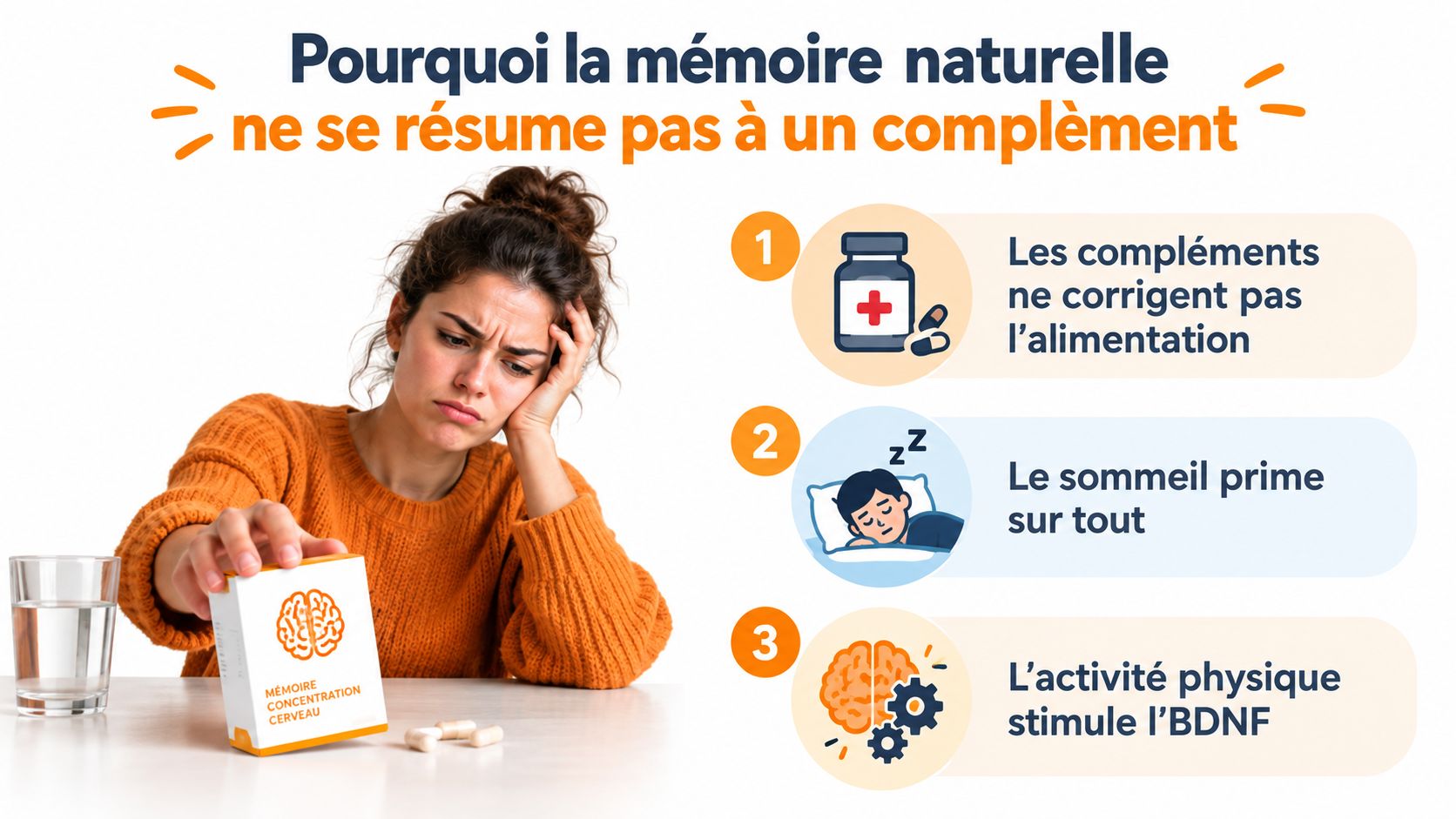
Boosting memory naturally does not start with a capsule. The priority is sleep, movement, diet, intellectual stimulation, and medical follow-up when forgetfulness becomes unusual. Lion's Mane may eventually find its place in this mix, but it does not replace any of these pillars.
Table of contents
- Why natural memory is not just about a supplement
- Moving daily to support cognition
- Diet and hydration for memory
- Intellectual stimulation and cognitive training
- Supplements and Lion's Mane: where to set the bar
- Building a realistic daily routine
- Measuring your progress and knowing when to consult
Why natural memory is not just about a supplement
You re-read a message, forget why you walked into a room, and search for a word that should be familiar. Before buying a product marketed as memory support, examine your sleep, your attention span, and your stress level. Memory depends on receiving information, consolidating it, and then retrieving it. A fragmented night or a very sedentary day can therefore blur your memories without necessarily signaling a disease.
French figures invite us to stay clear-headed. In 2024, the average sleep duration reached 7 hours 32 minutes, while 21.5% of French adults aged 18 to 79 were considered short sleepers (Santé publique France on sleep). This average describes neither the quality of your nights, your awakenings, nor the accumulation of a sleep debt.
Give a sleep routine four months
Before judging the effect of a supplement, test a stable routine for four months:
- Fixed schedules. Go to bed and wake up at similar times, including weekends.
- Daylight. Expose yourself to natural light at the start of the day.
- Screens off. Put away phones, tablets, and computers at least an hour before bed.
- Caffeine stopped after 2:00 PM. This includes coffee, tea, cola, and energy drinks.
- Regular movement. Aim for at least 2 hours and 30 minutes of physical activity per week, avoiding sessions just before bedtime.
French recommendations link sleep to concentration, learning, and memorization. They also indicate that regular activity can promote deep sleep (the Ministry of Health's sleep notebook). Your priority order must follow this logic: stabilize the foundation before looking for a stimulant.
Practical rule: evaluating your memory without tracking your sleep is like confusing two different problems.
During the first week, write down every morning the time you went to bed, the actual time you fell asleep if you know it, the time you woke up, any nighttime awakenings, naps, and your concentration level. Add a concrete observation, such as "easy reading" or "frequent forgetfulness." This journal does not provide a diagnosis, but it can reveal the link between irregular nights and brain fog.
Medical vigilance remains necessary. Santé publique France reports a measurable variation in cognition between 45 and 75 years old, based on a French cohort of 25,748 volunteers (data on cognitive functions and early-onset dementia). An occasional lapse in memory does not automatically signal a disease. Conversely, persistent, unusual, or bothersome difficulties deserve medical advice rather than just a box of supplements.
The glossary on the differences between supplements, ingredients, and claims helps to read promises with precision. Above all, remember this: convincing packaging does not fix insufficient sleep, an unbalanced diet, or exhausted focus.
Moving daily to support cognition
Walking to work, taking the stairs instead of the elevator, some household chores: these actions count. Movement must become a sustainable habit in your day, not a fitness resolution abandoned after a few weeks. Brisk walking, cycling, and walking for transportation support alertness and can also promote better sleep quality when done regularly.
Choose a sustainable level: 30 to 45 minutes of moderate activity per day, or 1 hour to 1 hour 30 minutes three times a week, and then maintain this pace for about four months. These benchmarks serve as a framework, not a competition. You should be able to observe your energy, sleep, and concentration without becoming exhausted.
Also count what doesn't look like exercise
The French Three-City study associated household activity and transportation with a lower risk of dementia in middle-aged people followed for 4.6 years. Leisure or sports activities, when considered in isolation, did not show the same association. This observation highlights the value of adding up ordinary movements rather than counting only planned sessions.
Your weekly chart can include:
- Functional walking. Get off one stop earlier, walk to run an errand, or take the stairs.
- Household chores. Cleaning, gardening, and tidying up add movement without needing a dedicated gym slot.
- Concrete tracking. Note the actual minutes performed, then your alertness at the end of the day.
- Gentle progression. Increase the duration only when the frequency becomes easy to maintain.
The user guide for energy adaptogens can inform your reflection on routines. It does not replace a day where you actually move, and Lion's Mane remains an occasional support, never the foundation of your strategy.
Do not look for a dramatic effect after one session. Instead, follow the trends: easier sleep onset, more stable alertness, less heavy mood, and a better ability to stay focused. Regular movement provides a more useful benchmark than an immediate sensation.
Diet and hydration for memory
A memory-friendly plate remains an ordinary plate, prepared with accessible foods. There is no need to pile up exotic powders or turn every meal into a nutritional protocol.
Focus on oily fish like sardines, mackerel, and salmon for their omega-3s. Regularly add pulses, varied vegetables, berries, nuts, and olive oil. Fiber and high-quality fats make meals more balanced, while limiting alcohol and excess added sugars prevents your diet from relying on products that are not satiating.

A simple day to replicate
Here is a practical framework, with no rare ingredients:
- Breakfast. Oatmeal, nuts, and berries.
- Lunch. Sardines and lentils, with vegetables.
- Snack. An apple and a few almonds.
- Dinner. Colorful vegetables, olive oil, and a source of protein.
Hydration deserves its own place. Even mild dehydration can disrupt attention and recall, especially on a hot day, during a long commute, or during physical activity. Keep a bottle visible, drink regularly, and do not habitually confuse fatigue with the need for coffee.
Supplements should not be used to compensate for a monotonous diet. If you rarely eat oily fish, a discussion with a professional can help determine if a targeted omega-3 intake is relevant. Likewise, a vitamin or mineral makes more sense when it addresses an identified need than when it is added randomly to an already busy routine.
Intellectual stimulation and cognitive training
An active brain needs variety. Mechanically repeating the same game might make you better at that game without automatically transforming your daily memory. To progress in a more useful way, alternate learning, recall, and social interactions.
New learning is the best starting point. A language, an instrument, active reading, or a manual skill forces you to remember, practice, correct, and reuse. Targeted games can also be useful, provided they don't become your only activity.
A short but varied program
Try this organization:
- Each day. Fifteen to twenty minutes of active reading, vocabulary, or delayed recall.
- Twice a week. A session dedicated to new learning, such as a language or an instrument.
- The weekend. A memory game with family, a card game, or a strategic group activity.
Social interaction adds a level of difficulty that apps poorly replicate: you have to listen, understand, respond, remember the context, and adjust your discourse. For a progressive strategic activity, you can consult this guide to learn how to play chess. The interest does not come from a "miracle game" status, but from the combination of planning, attention, position memory, and interaction.
Also work on delayed recall. After reading, close the book and summarize the main ideas without looking at your notes. The next day, try to recall the same points. This approach requires more effort than re-reading, which is precisely what makes it valuable.
Supplements and Lion's Mane: where to set the bar
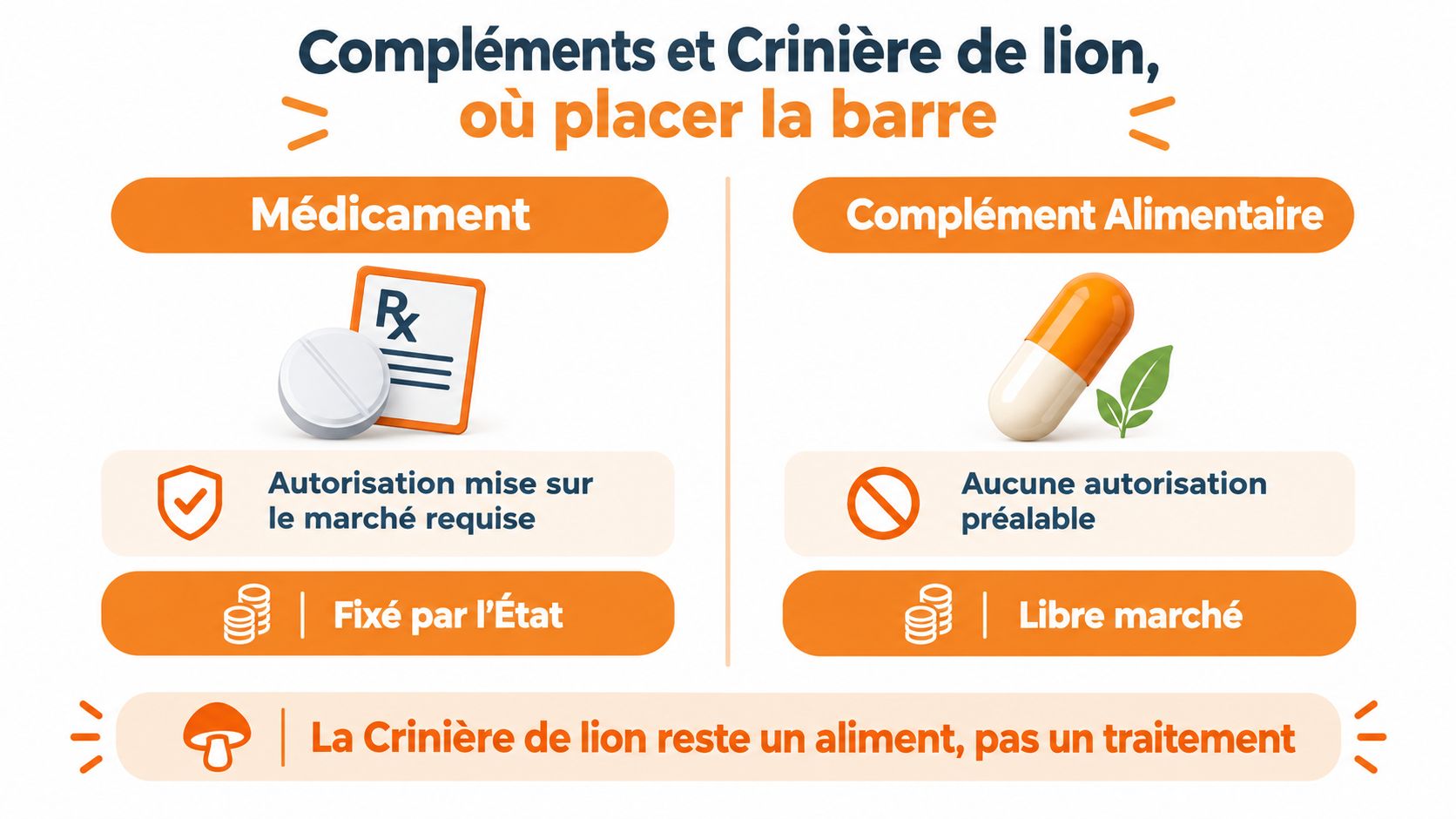
A dietary supplement sold in France is not automatically a product whose cognitive efficacy has been proven. Unlike drugs, it does not require market authorization before being sold, as noted by the French regulations on dietary supplements. Health claims are regulated, and a supplement cannot claim to prevent or treat a disease.
Lion's Mane, therefore, deserves a reasonable position. Preclinical results have fueled interest in its compounds and their potential links to nerve growth factor, but this does not constitute definitive human clinical proof for every extract, every dose, or every finished product. It is a potential support, not a miracle solution.
Compare the actual product, not just the ingredient
Omega-3s can be relevant if your diet is low in oily fish. Vitamin D depends on individual context and, ideally, advice based on blood status. Magnesium may be of interest to some people facing stress or degraded sleep, but it does not turn a bad routine into a good one.
For Lion's Mane, check the following:
| Criteria | What to check | Reassuring sign |
|---|---|---|
| Species | Exact mushroom name | Identification clearly stated |
| Part used | Fruiting body or mycelium | Part specified without ambiguity |
| Extraction | Stated ratio | Documented 10:1 ratio |
| Purity | Contaminant analyses | Certificates of analysis accessible |
| Manufacturing | Country and production framework | Manufacturing within the European Union |
| Format | Capsule, drops, or spray | Format adapted to your actual use |
A certificate of analysis mainly documents identity, purity, or the absence of contaminants. It does not, by itself, prove an improvement in memory. This distinction protects against a frequent confusion between manufacturing quality and clinical efficacy.
To enrich your French while stimulating daily learning, the SpeakMeeters guide to enriching your French offers a concrete path around vocabulary. The dossier on the history, science, and botany of Lion's Mane can also help to better understand the ingredient before integrating it into a routine.
Before buying, define a simple indicator, such as your concentration time or your success in a repeated task. Keep sleep, stress, and caffeine as stable as possible. Otherwise, you won't know what explains a potential variation.
Building a realistic daily routine
A useful routine must survive busy days. It should not force you to take several products at different times if you already know you will forget half of them. Organize it around fixed benchmarks, then add a supplement only if it integrates seamlessly.
Morning
Wake up at a regular time and look for daylight in the first few minutes. Have a breakfast with fiber and good fats, then dedicate twenty minutes to a precise intellectual activity, such as active reading, learning vocabulary, or reviewing a lesson.
If you choose a liquid format, the 5-Mushroom Complex from Pure Croft France comes in drops and sublingual spray. Use it as a routine benchmark, not as a performance promise. The product remains a supplement, not a replacement for sleep or breakfast.
Midday
Walk before or after lunch. Build your plate with a source of protein, vegetables, and whole grains, then keep a bottle of water within reach. This part of the day is ideal for accumulating movement without setting aside a long block of time for exercise.
In the evening
Schedule moderate physical activity early enough, prepare a simple dinner, and turn off screens an hour before bed. If your evening routine already includes a quiet moment, Reishi drops or spray can become a ritual, without being presented as a sleep treatment.
A monthly subscription can help those who forget to renew their routine, but you shouldn't let an automatic payment decide for you. Regularly check what you are using, why you are using it, and whether it remains consistent with your goals.
Measuring progress and knowing when to consult
You cannot honestly evaluate a supplement while simultaneously changing your bedtime, coffee consumption, diet, and physical activity. Start by noting your situation, change only a few variables at a time, and observe over a long enough period to spot a trend.
For four to six weeks, use a simple journal:
- Sleep. Bedtime, wake-up time, perceived duration, and nighttime awakenings.
- Caffeine. Time of the last intake of coffee, tea, cola, or energy drink.
- Movement. Actual duration of walking, cycling, housework, or other activity.
- Supplement. Product used, dose indicated on the label, and consistency.
- Daily memory. Concentration during a repetitive task, annoying lapses, and ease of recalling information.
Perform an identical mini-test at the beginning and the end. You can read a short list of words, wait before recalling them, then repeat exactly the same method later. This test is intended to observe personal progress, not to make a diagnosis or promise a result.
Credible progress is a consistent change, observed within a stable routine, not one good day in isolation.
Consult a doctor if daytime sleepiness becomes significant, if you snore with suspected breathing pauses, or if memory lapses worsen rapidly or progressively. New confusion, unusual difficulties with daily tasks, a family history of early-onset dementia, or taking medications that may influence cognition also justify professional advice.
In France, data from Santé Publique France highlight the scale of the subject: 525,000 people aged 40 or older living with dementia were identified as of December 31, 2014, with prevalence varying significantly by age (French epidemiological data on dementia). These figures do not prove that a supplement prevents dementia. Rather, they reinforce the value of a comprehensive approach, including sleep, physical activity, diet, intellectual stimulation, and medical follow-up.
The best strategy remains unspectacular but solid: sleep regularly, move often, eat simply, train your attention, and use a supplement only if its composition, quality, and place in your routine are clear.
Pure Croft France offers liquid extracts of functional mushrooms, notably Lion's Mane, in drops and sublingual sprays, manufactured in the European Union with accessible certificates of analysis. Discover the formats and transparency resources on Pure Croft France to choose a supplement that fits into a realistic routine, without mistaking it for a miracle solution.
Crafted with Outrank app
