

Lion's mane is often presented as a mushroom for the brain. But human evidence remains more modest than online promises, with dosages that vary widely between studies. Here are the 10 most studied effects, what they might truly suggest, and the precautions to keep in mind.
1. Pure Croft
Pure Croft is a French brand of functional mushroom extracts, designed for easy daily consumption. It is our top choice for people looking for a liquid form rather than a powder or capsule.
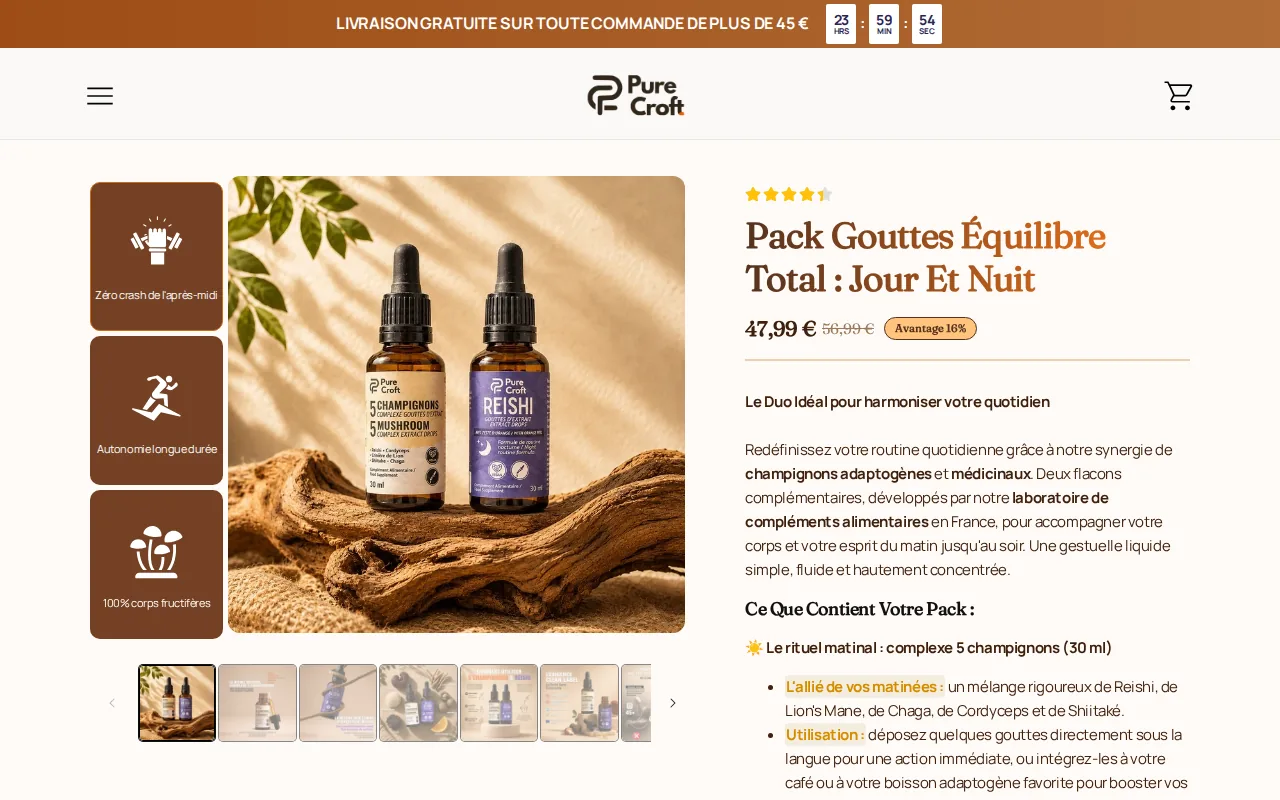
The brand offers sublingual sprays and drops. This dosage form avoids having to mix powder into a drink. It may therefore be better suited to a short morning routine, at the office, or on the go.
The 5-mushroom spray complex notably combines lion's mane with other functional mushrooms. The spray is presented as a liquid extract to be taken sublingually. The brand also highlights a French formulation and a focus on bioavailability, i.e., the portion of a compound that the body can actually absorb.
This point alone does not prove an effect on memory or mood. You must therefore read the label and follow the dose indicated by the brand, rather than automatically transposing a dose used in a study.
Pure Croft is suitable above all if you want a liquid ritual, without powder to prepare. If your priority is the scientific comparison of doses, first ask for the exact quantity of extract and its concentration ratio.
2. Neuroplasticity and brain protection, NGF, BDNF, ericenones and erinacines
Among lion's mane benefits, the cognitive effect is the one that attracts the most attention. Human trials mainly suggest a modest improvement in certain memory or cognitive function tests, not a guaranteed gain in concentration.

The mechanism studied relies on several families of molecules. Hericenones and erinacines have been studied for their link with NGF. This factor aids in the survival and development of nerve cells.
BDNF also plays a role in brain plasticity. Simply put, it contributes to the ability of neural networks to adapt. A scientific review describes these avenues while reminding us that clinical validation remains limited. You can consult the work indexed on PubMed regarding Hericium erinaceus.
Results are not uniform. Some research has used several grams of powder or extract per day. Others have studied much lower doses, depending on the product's concentration. A 10:1 ratio means the raw material has been concentrated, but it does not, by itself, indicate the quantity of active molecules.
The results on beta-amyloid and neurodegenerative diseases come mainly from animal or cellular models. They are interesting for formulating a hypothesis. They do not allow us to say that lion's mane prevents Alzheimer's, Parkinson's, or any other disease in humans.
For a cognitive goal, look instead at the consistency of intake and your own progress. Track your sleep, attention, and memory over several weeks. This is worth more than an isolated feeling after a single dose.
3. Mood, anxiety and stress, potential psychological support
Lion's mane may interest those seeking support for mood or stress. The available human trials sometimes suggest a decrease in scores related to anxiety or depression, but sample sizes remain limited.

The proposed mechanisms involve BDNF, neurogenesis, and certain pathways related to inflammation. This scientific language describes avenues. It does not mean the mushroom treats an anxiety or depressive disorder.
A trial cited in the literature used daily intake over several weeks. This duration matters. Effects on mood, when they exist, do not resemble those of a stimulant taken just before a task. They can be slow, subtle, and difficult to separate from better sleep or a more stable routine.
If you are already following therapy or treatment, do not replace it with a supplement. For persistent distress, grief, or anxiety that hinders daily life, a grief counseling online therapy resource may be more appropriate than a nutritional product.
The right benchmark is your daily functioning. If you sleep better, ruminate less, or resume an activity, take note of that change. But do not automatically attribute any improvement solely to lion's mane.
4. Sleep and recovery, indirect effects to watch
The effects of lion's mane on sleep seem mainly indirect. Some human studies report an improvement in sleep-related scores, while the proposed mechanisms involve BDNF and wake-sleep circuits.

It should not be confused with a sleeping pill. Lion's mane does not guarantee faster sleep onset. In some people, improved mood or reduced stress may aid recovery. In others, no notable change appears.
The timing of intake deserves simple observation. If you feel a form of alertness after taking it, choose the morning. If you do not notice anything, follow the product instructions rather than the habits of another user.
Recovery also depends on much more powerful factors: regular schedules, morning light, suitable physical activity, and reducing late-night screen time. A supplement does not compensate for persistent sleep debt.
If your nights remain poor for several weeks, look for the cause. Snoring, sleep apnea, pain, intense stress, or medication may require medical advice.
5. Immunity, inflammation and antioxidants, general support for the body
Lion's mane polysaccharides, including beta-glucans, are among the compounds studied for their immunomodulatory effects. The term means they can alter the activity of certain immune cells. It does not mean they make immunity stronger in every situation.

Preclinical work also describes antioxidant activity. Phenolic compounds could help neutralize certain reactive oxygen species in the lab. The transition from a chemical test to a measurable benefit in humans remains uncertain.
Anti-inflammatory effects have been observed in several models. They notably involve pathways related to cytokines. This provides an avenue for research into chronic diseases, but does not justify stopping anti-inflammatory treatment.
The best use remains that of a supplement alongside a health routine. A varied diet, suitable activity, and sufficient sleep have a more solid foundation for supporting the body.
Be cautious if you have an autoimmune disease or are on treatment that affects immunity. The question is not whether the product is natural. You must verify if it is suitable for your situation.
6. Digestion and microbiota, the prebiotic hypothesis
Digestion is among the traditional uses and frequently cited lion's mane benefits. Non-digestible fibers and polysaccharides could serve as a substrate for certain intestinal bacteria, which explains the prebiotic hypothesis.
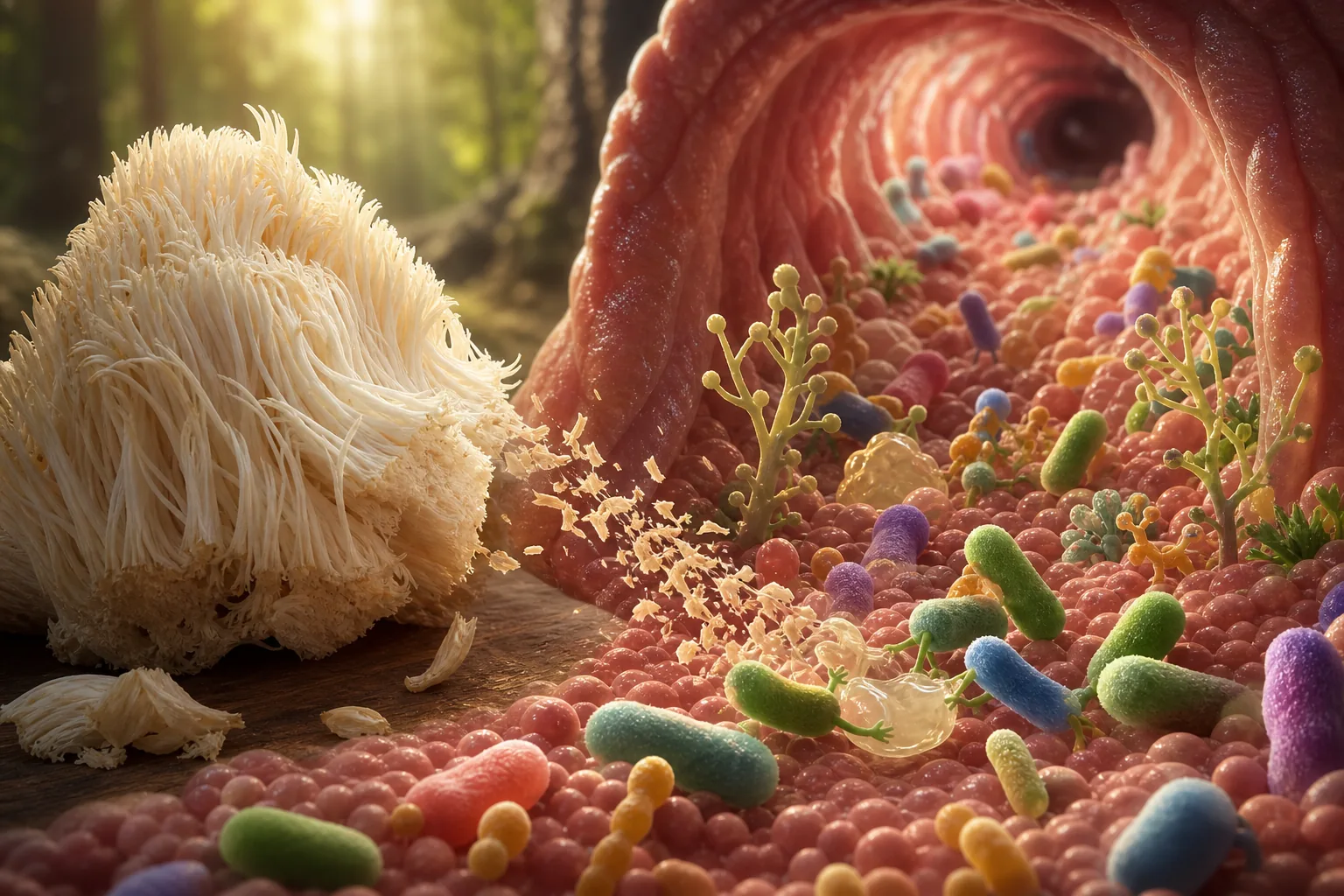
This avenue is plausible, but it does not allow one to promise a cure for reflux, an ulcer, or inflammatory bowel disease. Results vary depending on the part of the mushroom, the extraction, and the dose.
A concentrated extract does not necessarily have the same profile as a portion of whole mushroom. The amount of fiber can also change significantly. If your main goal is the microbiota, check whether the label mentions an extract or whole powder.
Initially, some people may experience bloating, nausea, or digestive discomfort. Starting with the dose indicated on the product helps better gauge your tolerance. Do not increase quickly because an online guide mentions several grams.
For irritable bowel syndrome, Crohn's disease, or colitis, seek advice from a healthcare professional. Lion's mane can accompany a routine, but it replaces neither diagnosis nor follow-up.
7. Cardiovascular health, cholesterol, lipids and inflammation
The cardiovascular effects of lion's mane remain preliminary. Studies on animals and cells have examined cholesterol, triglycerides, LDL oxidation, and certain inflammatory pathways.

This work provides a research direction. It does not prove that an extract reduces the risk of heart attack or clears arteries. Human data are too limited to replace management of cholesterol or blood pressure.
One point deserves special attention: preclinical models have also raised a possible action on platelet aggregation. This does not confirm an effect in humans, but caution is logical if you are taking an anticoagulant or antiplatelet medication.
Before adding a supplement, list your medications. Show the label to your pharmacist or doctor. A highly concentrated liquid form can complicate comparison with a study that used whole powder.
Work on the subject, such as that indexed in biomedical literature, remains a signal to be confirmed. Data published on the metabolic effects of Hericium erinaceus do not replace a lipid profile.
8. Blood sugar and metabolism, still preliminary results
Blood sugar is one of the effects often cited in content on lion's mane benefits. However, the clearest results come mainly from animal or laboratory studies.

In diabetic animals, some work has observed changes in blood sugar, lipids, or inflammation. These models are used to explore a mechanism. They do not allow for setting a dose for a diabetic person.
Caution is important if you are taking insulin or hypoglycemic medication. A supplement that changes blood sugar, even slightly, could complicate monitoring. Never lower your treatment based on a feeling.
If you are testing a product with your healthcare professional's agreement, keep up your usual measurements. Also note changes in meals, activity, and sleep. Without this context, an isolated variation says very little.
At this stage, lion's mane can be studied as a potential metabolic support. It should not be presented as a treatment for diabetes or a weight loss method.
9. Antimicrobial and potential anticancer defenses, what laboratories say
Lion's mane shows antimicrobial activity in certain laboratory trials. Researchers have studied extracts against bacteria and fungi. These results can help identify interesting molecules for future research.

They do not prove that a supplement eliminates an infection in humans. Therefore, a box of product does not replace a prescribed antibiotic or antifungal treatment.
The anticancer potential requires even more perspective. In vitro work has described an induction of apoptosis, that is to say, the programmed death of certain cells, as well as an action on pathways such as PI3K and AKT.
These results are purely preclinical. A cell in a dish does not react like a tumor in an organism. Dosage, absorption, and safety change completely between these two situations.
It would therefore be misleading to talk about cancer prevention or treatment. If you are being followed in oncology, report any supplement to your medical team. Interactions and the quality of the extracts must be examined on a case-by-case basis.
10. Forms, dosage and safety, choosing a suitable lion's mane extract
The form chosen influences the interpretation of the dosage. Whole mushroom, fruiting body powder, mycelium, and concentrated extract are not interchangeable. A 10:1 ratio indicates a concentration of raw material but does not guarantee a precise content of erinacines or hericenones.
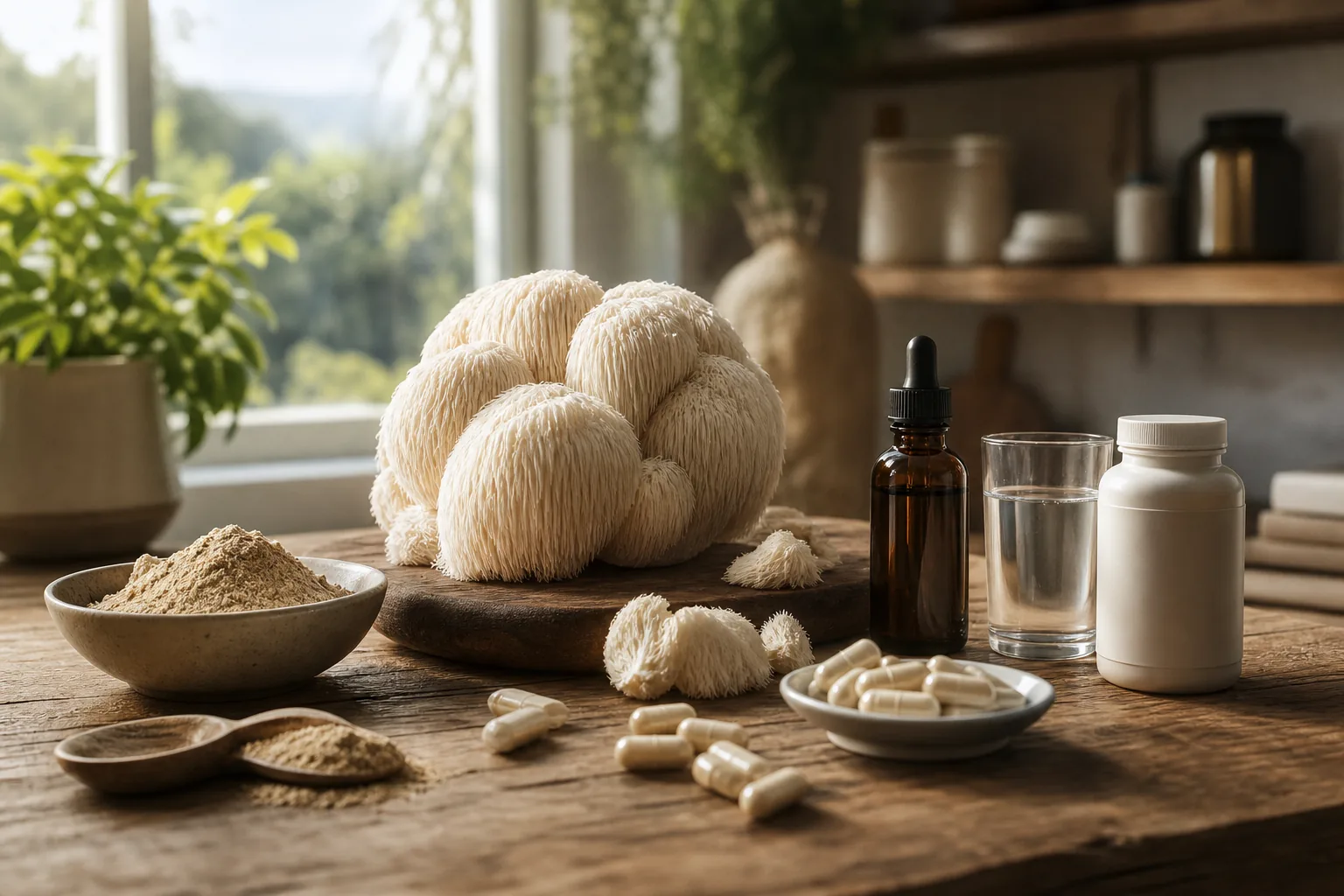
The most common forms
- Mushroom powder: it may contain more fiber and can be mixed into a drink. The taste and texture do not suit everyone.
- Capsule: it is easy to dose according to the label. However, you must check the part used and the quantity per intake.
- Liquid extract: it integrates quickly into a routine. The actual concentration must be legible, especially when the product mentions high density.
- Sublingual spray: it avoids the preparation of a drink. The quantity per spray must be clearly indicated.
What the studied doses say
The published figures are very heterogeneous. Some human studies have used approximately 1.8 g per day, others 2.4 g or several grams of powder. Other protocols have tested quantities in milligrams with a concentrated extract. One cannot, therefore, copy a dose without knowing the galenic form.
This variation explains a large part of the confusion online. A few micrograms are not comparable to several grams of powder. Likewise, 500 mg of an extract does not necessarily represent 500 mg of whole mushroom.
| Your priority | Form to examine | Point to check |
|---|---|---|
| Quick morning routine | Spray or drops | Quantity per dose and instructions for use |
| Fiber intake | Fruiting body powder | Mushroom part and composition |
| Taking without mushroom taste | Capsule | Extract weight per capsule |
| Concentrated extract | Liquid or capsule | Extraction ratio and declared content |
At Pure Croft, the 5-mushroom complex in drops aligns with this liquid intake approach. The product is presented with a 10:1 ratio and an intake without powder or tablets. This remains formulation information, not clinical proof of a precise effect of lion's mane.
Precautions to know
Reported adverse effects are often digestive and mild, such as bloating or nausea. A skin reaction is possible in a person allergic to mushrooms. Stop taking if you experience an unusual reaction and seek medical advice.
Seek advice before use if you are pregnant, breastfeeding, a minor, or taking anticoagulant treatment. The same caution applies to treatments that act on immunity, blood sugar, or blood pressure.
Choose a product whose label clearly indicates the material used, the quantity per dose, and allergens. If this information is missing, move on. Transparency is better than a marketing figure that is difficult to verify.
FAQ
What are the main lion's mane benefits?
The best-studied effects concern cognition, mood, and sometimes sleep. Preclinical research is also examining immunity, digestion, inflammation, and metabolism. Human results remain modest and depend on the form, the extract, and the dose used.
Does lion's mane really improve memory?
Lion's mane can improve certain cognitive tests in a few human trials, but the effect is neither guaranteed nor immediate. Studies have used different products and doses. It should not be presented as an Alzheimer's treatment or as a replacement for medical follow-up.
What dose of lion's mane should be taken per day?
There is no universal dose for all products. Studies have tested quantities ranging from several hundred milligrams to several grams depending on the form. Follow the product label and seek advice if you are on treatment or have a chronic illness.
Is lion's mane dangerous?
Lion's mane is often well tolerated, but it can cause digestive discomfort or an allergic reaction. Caution is recommended with anticoagulants, antiplatelets, and certain metabolic treatments. Pregnancy, breastfeeding, or being a minor also justify medical advice before taking it.
How long does it take to feel an effect from lion's mane?
Cognitive and mood trials generally observe participants for several weeks. A single intake does not allow for conclusions about the effects of lion's mane. Note your sleep, attention, and digestion before starting, then compare these benchmarks after a few weeks.
Conclusion
Lion's mane deserves measured interest: the most credible signals concern cognition and mood, while anticancer, cardiovascular, or metabolic effects remain preliminary. If you want to test a liquid extract, choose a clear label, follow the dose indicated by Pure Croft, and have your choice validated if you are on treatment.
Sources and method of interpreting evidence
This synthesis distinguishes human trials from animal studies and in vitro work. The doses cited in the studies are not general recommendations. They only serve to show why comparison between powder, extract, and spray requires caution.
