

Are you looking for an energy boost, or perhaps support for your wellness routine? Cordyceps sinensis and ginseng have different traditional uses, and the available data does not allow them to be declared winners on all counts. Here are eight options and profiles to compare, with one clear benchmark: the studied extract does not have the same objectives as the Pure Croft mushroom complex.
1. Pure Croft — a five-mushroom complex for a morning routine
The Pure Croft five-mushroom complex is a spray or drop formula designed for a morning routine. It is primarily aimed at adults who want an option that is simple to incorporate into their day, with stated benefits related to mental clarity, stress, and general well-being.

The blend includes five mushrooms, including Cordyceps sinensis. The brand offers it in a sublingual format, meaning under the tongue, and indicates a 10:1 concentrated extract for its drop version. This ratio means that ten parts of raw material are used to produce one part of extract. By itself, it does not prove superior absorption or a clinical effect.
The difference regarding the Cordyceps sinensis vs. ginseng comparison primarily comes down to the intended goal. Pure Croft presents its complex as a general routine formula. The available clinical data on Ophiocordyceps sinensis tends to focus on areas related to energy or immunity. No clinical evidence demonstrates that the Pure Croft blend improves concentration or reduces stress.
If you prefer a liquid format, consult the Pure Croft five-mushroom drop complex product page to verify the ingredients and usage instructions. Keep in mind that a supplement is not a substitute for sleep, a suitable diet, or a medical check-up if fatigue persists.
This choice therefore corresponds to a multi-mushroom routine, not an isolated dose of cordyceps or ginseng. The precise composition and dosage per serving should be verified on the product label.
2. Ophiocordyceps sinensis — the mushroom associated with Chinese tradition
Ophiocordyceps sinensis, formerly known as Cordyceps sinensis, is the so-called "caterpillar" fungus. It is of particular interest to readers drawn to traditional Asian practices and research on energy or immune support.
In nature, this fungus parasitizes the larvae of ghost moths that live underground. The harvested complex includes the body of the larva and the fertile part of the fungus. Its unique cycle also explains its long-standing link with traditional Chinese and Tibetan medicine. The Chinese name dōng chóng xià cǎo evokes the image of "winter worm, summer grass."
Wild harvesting raises an ecological issue. Laboratory cultivation can meet part of the demand, but cultivation methods do not always produce a chemical profile identical to that of wild specimens.
The page dedicated to Ophiocordyceps sinensis and its life cycle describes its high-altitude habitat and the issues related to its harvest. For you, this means that a species name on a label is not enough: check the part used, the origin, and the form of the extract.
Traditional uses do not constitute proof of efficacy. They provide context, but do not allow for promises regarding effects on fatigue, infections, or endurance.
3. Cordyceps sinensis — the option studied for its bioactive compounds
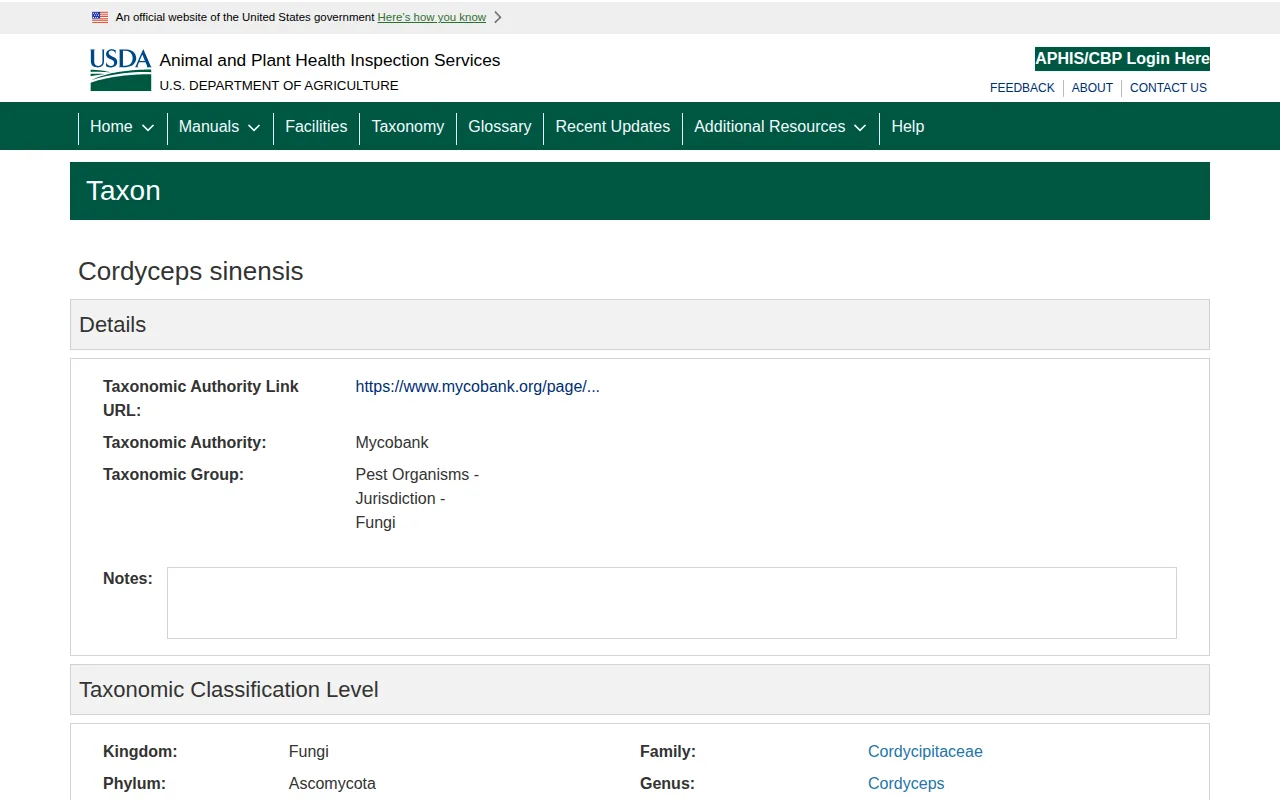
The Cordyceps sinensis profile is of interest to those who want to understand the studied molecules rather than relying solely on energy promises. Cordycepin is one of the most examined compounds, especially in preclinical work.
The bioactive compounds are not evidence of human benefit. A substance may act in a laboratory experiment without producing the same result after ingestion. It would therefore be misleading to turn a possible mechanism into usage advice.
Cordycepin is often associated with discussions about ATP, the molecule that provides energy to cells. However, a chemical resemblance to certain elements of energy metabolism does not demonstrate that the supplement increases muscle ATP in a person. Results in cells or animals do not allow for predicting a measurable improvement in endurance or fatigue.
A Pure Croft formula may be chosen for a broader routine, but it should not be presented as the equivalent of an isolated extract that has undergone a clinical trial. If you are comparing labels, clearly distinguish between the announced species, the part of the mushroom, and the extract dose.
In practice, cordyceps is the profile to examine for its molecules and history of use. The promise of an energy boost remains to be confirmed in humans.
4. Comparing formats — examining the label
To compare supplements, start by noting their format and composition as indicated on the label. Distinguish between a multi-ingredient formula and a product presented as a single-ingredient extract: these descriptions do not denote the same composition.
The name displayed alone is not enough to determine what a product contains. If information is missing, avoid inferring the composition or expected effects based on the format alone.
For those comparing Pure Croft formats, the five-mushroom spray for the morning routine is a multi-ingredient formula. Do not confuse it with a pure Cordyceps sinensis extract: the format and composition are not the same.
Comparison is therefore best supported by the details on the label rather than a general promise. Note the ingredients and quantities displayed, then compare this information between products without assuming they are equivalent.
5. Panax ginseng — the ginsenoside-based profile
Panax ginseng, also known as Asian ginseng, is a root used in traditional preparations. It may interest those looking for a general tonic, but its effects vary depending on the preparation and the amount of ginsenosides.
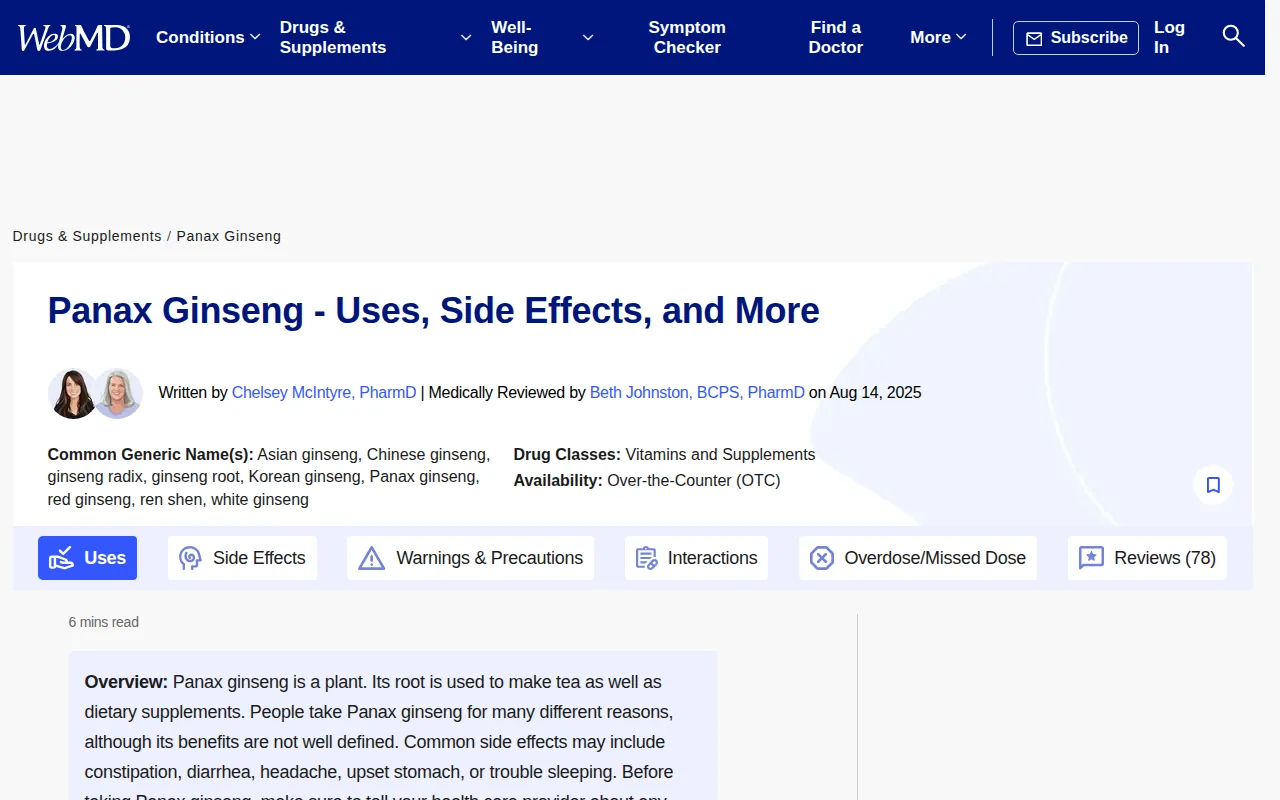
Ginsenosides are among the most studied compounds in the root. The profile may also contain polysaccharides and polyphenols. Content changes based on cultivation, harvest, and processing. Two products bearing the same "ginseng" mention may therefore not have the same composition.
Preparations marketed under the common name "ginseng" may differ in their composition. Effects and precautions may vary. Here, the comparison concerns Panax ginseng, not all plants sold under the common name "ginseng."
Human studies on ginseng do not provide a uniform verdict. Some clinical research has examined fatigue or metabolic functions, while reviews highlight that results depend on the type of preparation and protocol. Preclinical data alone does not justify a firm promise of vitality or immunity.
To compare the two options, ask yourself if you are looking for a root standardized for ginsenosides or a mushroom studied for other compounds. The word "adaptogen" is not enough to predict your individual response.
6. Cordyceps sinensis for energy — examining data on fatigue and ATP
Cordyceps sinensis is often associated with energy and fatigue. It may attract athletes or people who feel "run down," but the idea of an ATP boost in humans is not established to date.
ATP is a molecule that cells use as an energy source. Preclinical work examines how certain cordyceps compounds might act on pathways related to energy metabolism. This does not prove that taking it directly increases ATP production in muscles or improves performance during a workout.
Species and extracts must also be separated. Studies on one preparation do not automatically validate all products that mention "cordyceps" on the label. A mixture of several mushrooms is not the same intervention as an extract studied in isolation.
For persistent fatigue, first seek the cause with a healthcare professional. A supplement should not delay a medical check-up, especially if the fatigue is new, intense, or accompanied by other symptoms. Promises regarding endurance also do not replace the effect of rest, nutrition, and training progression.
Cordyceps can be an interesting subject of research. For now, available data does not allow it to be presented as a stimulant comparable to caffeine or as a treatment for fatigue.
7. Ginseng for vitality — comparing uses and precautions
Ginseng is often chosen to support vitality or resistance to fatigue. Clinical results are variable, and ginseng preparations can take different forms.
A review of randomized trials on Panax ginseng reports positive results in some works, but also studies showing no effect. Observed side effects in the reviewed trials were generally mild, including hot flashes, insomnia, or digestive issues. This remains a limited basis for drawing a general conclusion.
Ginseng can also interact with medications or may not be suitable for certain health conditions. If you are taking treatment, have a chronic illness, or are pregnant or breastfeeding, seek advice from a doctor or pharmacist before taking it. Safety data from a short trial does not cover every person or every mixture.
Children should not be given ginseng-based supplements without medical advice. In the case of diabetes treatment or medication affecting coagulation, discussion with the professional overseeing your file is particularly prudent.
In the Cordyceps sinensis vs. ginseng showdown, do not choose based on the mere promise of "vitality." Look at the form used, the dose indicated, and the quality of evidence for the effect you are seeking. In the case of persistent symptoms, the right next step is a medical evaluation.
8. Combining Cordyceps sinensis and ginseng — an option to evaluate with caution
Combining Cordyceps sinensis and ginseng may seem attractive if you are looking for multiple effects at once. However, no known clinical trial directly compares the two plants, and there is no solid evidence that a combination improves their effects.
A combination also makes interpretation more difficult. If you start two supplements at the same time and have an adverse effect, it becomes less simple to know which one is the cause. A multi-ingredient formula adds another limitation: each component and its quantity must be checked before judging the product.
The table below serves to choose an angle for comparison. The doses cited are benchmarks from sources, not personalized recommendations.
| Criterion | Cordyceps sinensis | Panax ginseng | Benchmark for choosing |
|---|---|---|---|
| Monitored compounds | Cordycepin; depending on the extract, adenosine, polysaccharides, sterols, and peptides | Ginsenosides, including Rg1 and Re; also polysaccharides and polyphenols | Verify the actual composition of the extract, not just its common name. |
| Reported dose | — | 3 g per day in the reported benchmark for a ginseng preparation, with 60 mg of ginsenosides | Do not transpose a raw root dose to a concentrated extract. |
| Effects studied or uses cited | Energy, fatigue and immune support; low to moderate level of evidence for a studied entry | Fatigue, vitality and general well-being; variable human trial results | The species, extracts and criteria studied differ. |
| Useful precaution | Evidence depends on the species and material used | Possible interactions and variability in ginsenoside content | Seek advice before combining if you are taking medication. |
There is no demonstrated ideal ratio for combining the two. Do not add a dose at random to replicate a formula sold as "synergistic." If you wish to try a supplement, start by discussing the specific product with a healthcare professional and follow its label.
FAQ
Is Cordyceps sinensis more effective than ginseng?
One cannot say that Cordyceps sinensis is more effective than ginseng for all uses. Available data concerns different preparations and criteria, with no reliable direct comparison between the two. Cordyceps is studied for certain compounds and energy-related uses; ginseng has human trials with variable results.
Can you take Cordyceps sinensis and ginseng together?
There is no clearly established ratio or combined benefit. Both products can have different compositions, and a mixture complicates the identification of an adverse effect. Seek medical or pharmaceutical advice before combining them, especially if you are taking treatment or living with a chronic illness.
Does Cordyceps sinensis really increase ATP?
An increase in ATP in humans has not been demonstrated to date. Mechanisms related to energy metabolism are studied in preclinical settings, but they do not prove a perceived improvement in endurance. Always check whether the evidence concerns cells, animals, or people, as these levels are not interchangeable.
What ginseng dose is often cited?
A dosage benchmark for ginseng mentions 3 g per day and 60 mg of ginsenosides in the described context. This is not a universal dose: the form, concentration, and product instructions matter. If you are taking medication, seek advice before starting.
Is Asian ginseng the same plant as other types of ginseng?
No. Panax ginseng refers to one species of ginseng; the results of a study on one plant do not automatically apply to another. Check the Latin name on the label to see which plant it is.
Conclusion
Choose ginseng if you want to study a root and its ginsenosides; look at cordyceps if your interest lies in its compounds and traditional uses, without presuming an ATP gain. For a multi-mushroom routine, discover the Pure Croft formats and check their label, then seek advice if you are taking treatment.
