

Reishi is often presented as a support for immunity or calm, but it can also cause adverse effects. To use it cautiously, start by clarifying your goal, checking the chosen form, and then reviewing your medications and personal risks.
Step 1: Define your goal and verify what reishi can actually provide
Before focusing on the side effects of reishi, ask yourself what you expect from taking it. Common uses include immune support, fatigue, and stress. However, results vary depending on the preparation, and data in humans remains limited for many of these effects.
This mushroom contains compounds studied for their potential effects on immune defenses. Laboratory and animal studies have also examined effects on cancer cells. This does not prove that a supplement treats or prevents cancer in a person. Never replace a prescribed treatment with a mushroom or other supplement.
Fatigue, anxiety, and sleep are sometimes cited as goals. Here again, a result observed in a study does not guarantee an effect for you. If you are seeking support for stress, note your precise goal and the changes you wish to monitor. For example, you can track your sleep or fatigue level without altering any medical treatment.
Healthline's summary of the potential benefits of reishi notes that the available data is not sufficient to confirm many benefits in humans. It also highlights that supplements are not suitable for everyone. This distinction between research leads and proven effects helps maintain realistic expectations.
At Pure Croft, we offer reishi extracts in sprays and drops. The choice of a form does not, on its own, allow you to predict your reaction or guarantee a benefit. If your goal relates to a medical condition or a persistent symptom, speak to a healthcare professional first.
Step 2: Choose a form, check the quality, and define a cautious intake
Form matters, as whole powder, an extract, an herbal tea, or drops are not necessarily the same preparation. The quantity listed on two labels does not always allow for a direct comparison of products. A high-density extract refers to a concentrated product; this term alone does not specify the dose adapted to your situation.
The doses cited in public resources differ depending on products and uses. Some references mention amounts ranging from a few hundred milligrams to several grams per day. These are benchmarks based on different preparations, not instructions to apply to your supplement. Do not convert the dose of a powder to the dose of an extract without reliable manufacturer guidance or professional advice.
Before purchasing, read the label in its entirety. Check the part of the mushroom used, the quantity per serving, and storage instructions. Also, look at whether the manufacturer provides information on the origin and quality controls. A 10:1 ratio, when indicated, means a quantity of raw material was used to obtain a smaller quantity of extract; it does not say everything about the final composition or safety.
If you wish to compare the formats offered by Pure Croft, the sublingual reishi spray is an option to examine along with its label and instructions. We also offer drops, but the choice between spray and drops does not replace a review of your medications or medical history.
To limit surprises, do not start several new supplements at the same time. Follow the dose indicated on the product and avoid increasing it because you do not feel an immediate effect. In case of digestive discomfort, taking it with a meal can be easier to tolerate, but seek advice if the symptom persists.
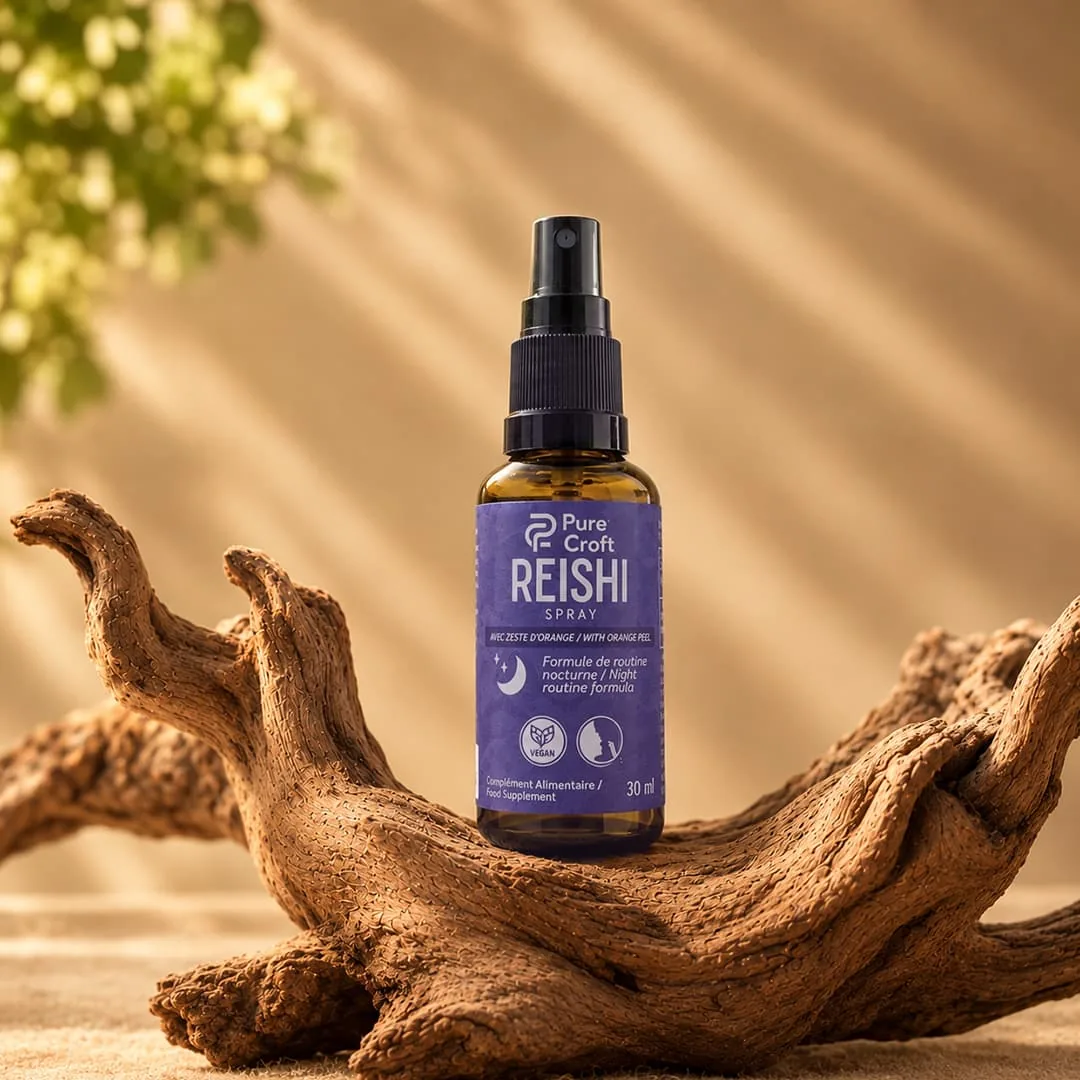
Taking it in the evening is sometimes suggested to support a relaxation routine. This is not a medical rule, and reishi can bother some people. If you test taking it, keep a note of the time and any new symptoms. Make only one change at a time in order to better identify what is happening.
Step 3: Identify side effects and know how to react
Reported side effects of reishi are often digestive or mild, but they are not the same for everyone. Nausea, loose stools, bloating, or stomach discomfort can occur. Some people also report dry mouth, dizziness, or skin irritation.
A skin reaction, such as itching or a rash, can occur after intake. One specialized source indicates that these symptoms can appear quickly, sometimes within 48 hours. If you notice a new reaction after starting reishi, stop taking it and seek advice, especially if it spreads or worsens.
Mild symptoms should not be ignored if they persist. Note the product name, the quantity taken, and when the signs started. Keep the packaging: it can help the pharmacist or doctor verify the preparation. Avoid taking the supplement again to "test" if the reaction was severe.
Dizziness and digestive issues can be part of the possible reactions. This does not lead to the conclusion that a risk is impossible, especially if you have a medical condition or take medications.
Liver damage has been reported in rare cases, but it is not always possible to establish that reishi was the cause. Stop taking it and seek medical advice promptly if you observe yellowing of the skin or eyes, very dark urine, persistent pain under the ribs, or unusual significant fatigue.
Severe manifestations, such as difficulty breathing or facial swelling, require urgent medical assistance. Do not try to manage a significant allergic reaction on your own. The time between intake and the onset of signs can help with assessment, but it is not enough to make a diagnosis.
To follow a trial, keep a simple journal: start date, dose indicated on the label, and any symptoms. This record is useful if you need to stop the product or talk to a caregiver.
Step 4: Check for interactions and contraindications with a healthcare professional
Before taking reishi, review your treatments with a doctor or pharmacist. The risk of bleeding deserves special attention: reishi can enhance the effect of medications that reduce coagulation or platelet aggregation. Do not combine it on your own with an anticoagulant, antiplatelet drug, or certain pain medications.
Reishi could also modify blood glucose levels. If you are taking treatment for diabetes, an additive effect could lower your blood sugar. Current data does not allow for predicting with certainty if this will occur. Do not adjust your medication alone and ask the prescriber if your blood sugar needs to be monitored more closely.
A drop in blood pressure is also mentioned. If you take medication for hypertension, seek advice before adding a reishi extract. Dizziness or weakness can have several causes; do not reduce your treatment without medical instructions.
Also report other supplements and herbs you are taking. Effects can accumulate, even if each product seems harmless when taken separately. Before a scheduled surgery, ask your healthcare team if you should stop taking reishi and when. The decision depends on your state of health and the type of treatment being followed.
Safety during pregnancy and breastfeeding is poorly documented. In these situations, avoid self-medication and seek professional advice before taking any. The same principle applies if you have liver disease, a coagulation disorder, or are on complex treatment.
When talking with a professional, bring a photo of the label or the bottle. Specify the form, the quantity per serving, and the start date. For a Pure Croft product, these elements allow for a discussion about the exact formula rather than just the word "reishi."

Step 5: Evaluate warning signs and decide if you should avoid reishi
Reishi is not a suitable choice for everyone. If you take an anticoagulant, diabetes medication, or blood pressure treatment, seek advice before starting. Anyone who has previously had liver issues should also have the risk checked by a professional.
Stop taking it and seek advice if you have persistent digestive issues, a skin rash, or repeated dizziness. Consult a doctor without delay if you see signs that could suggest liver problems or a severe allergic reaction. Do not resume the product before receiving advice tailored to your symptoms.
Risk does not depend solely on quantity. The form used, the quality of the product, and your health status can all count. A whole powder and an extract are not interchangeable; information about one preparation does not automatically apply to another. The mention "natural" does not guarantee the absence of interactions.
If you are considering Pure Croft drops, check the indications for the Reishi Extract Drops, then verify with your pharmacist that taking them is suitable for your situation. The product is not a substitute for medical advice. To compare purchasing criteria, our guide on buying sublingual reishi can help you examine formats and label information.
When in doubt, the safest choice is to postpone taking it until you have spoken with a professional. This is especially true if you are on multiple treatments or have a history of bleeding or liver disease.
FAQ
What are the most common side effects of reishi?
Reported side effects of reishi mainly include digestive issues, such as nausea or stomach discomfort. Dizziness and skin irritation are also described. The reaction varies according to the individual and the preparation. Stop taking it if a symptom appears after starting the supplement, then seek advice if it persists or worsens.
Can reishi damage the liver?
Liver damage has been rarely reported, but the available cases do not always prove that reishi is the cause. If you have liver disease, seek advice before taking any. Stop the supplement and consult a doctor promptly in case of yellowing of the eyes or skin, dark urine, or persistent pain.
Is reishi dangerous with an anticoagulant?
Reishi can increase the risk of bleeding with certain anticoagulants or medications that act on platelets. Do not start this supplement without talking to the doctor or pharmacist who is familiar with your treatment. Never suspend a prescribed medication to be able to take reishi.
What dose of reishi should I take?
There is no single dose that suits all reishi preparations. The quantity depends notably on the form and concentration of the extract. Follow the label and seek advice if you are on treatment or have a health issue. Do not take the dose from a study without verifying that it concerns the same type of product.
Can you take reishi in the evening?
Some choose the evening to integrate it into a relaxation routine, but this time is not a validated medical instruction for everyone. Reishi can also cause discomfort or dizziness. If you try taking it, follow the label and monitor your reactions. Seek advice if you take medication that affects sleep or blood pressure.
Conclusion
Reishi can cause adverse effects and interact with treatments, even though the reported reactions are often mild. Before taking it, check the label and review it with a pharmacist or doctor, especially if you are on regular treatment. If an unusual sign appears, stop the supplement and seek advice.
