

Avoid Hericium if you have a known mushroom allergy, during pregnancy or breastfeeding, and in children. If you are taking anticoagulant, antidiabetic, or immunosuppressive medication, speak to your doctor before taking it. At the slightest sign of a severe allergic reaction (swelling, difficulty breathing), stop immediately and seek emergency medical attention.
In short:
- The side effects of Hericium are generally mild, mainly digestive or skin-related, and disappear after stopping intake.
- Pregnant or breastfeeding individuals, children, and people taking immunosuppressants should consult a professional before taking it.
- Potential interactions mainly concern anticoagulants, with an increased risk of altering blood coagulation.
- In the event of a serious or moderate allergic reaction, stop taking the product immediately and consult a doctor.
- Caution is recommended, especially for people with allergies, autoimmune conditions, or those on specific treatments.
Table of Contents
- Hericium side effects: what you really risk
- Who should avoid Hericium or seek medical advice?
- Hericium and medication: interactions to know
- What to do in the event of an adverse reaction?
- How to start an Hericium regimen without unpleasant surprises
- What studies really say about Hericium
- Should you trust contraindications or ignore them?
- Our sublingual formats for easily incorporating Hericium
- More on Hericium safety
- Sources
Hericium side effects: what you really risk
Lion’s mane side effects are generally mild. Clinical studies conducted on small groups describe it as generally well tolerated, with discomfort mainly affecting the digestive system or skin, which disappears after stopping intake. This is not a guarantee of complete safety, but rather a reassuring sign for most users.
Here is what is most frequently reported in user feedback and available literature:
- Digestive issues: mild nausea, bloating, and sometimes diarrhea, especially at the beginning of the regimen or when taking too high a dose.
- Skin reactions: itching, red patches, and localized hives.
- Respiratory symptoms: discomfort or coughing in people with atopic conditions, particularly when handling powder rather than liquid extracts, as shown by studies on respiratory reactions to fungal powders.
- Anaphylaxis (rare): swelling of the face or throat, generalized hives, difficulty breathing, and a drop in blood pressure. This is a medical emergency, period.
An important distinction to make: a slightly heavy stomach on the first day has nothing to do with a genuine immunological reaction. The former generally subsides by reducing the dose. The latter often worsens with each new dose and warrants stopping the product entirely.
Who should avoid Hericium or seek medical advice?
Certain individuals should exercise particular caution before introducing this supplement into their routine. The following situations warrant caution:
- Pregnancy and breastfeeding: no robust studies have evaluated Hericium in pregnant or breastfeeding women. This lack of data, documented in reviews on research gaps for plant-based supplements, means it should be avoided as a precaution rather than waiting for a problem to arise. Ask your gynecologist or midwife for advice before making any decision.
- Children: pediatric data are almost non-existent. Without explicit advice from a pediatrician, it is best to refrain.
- Autoimmune diseases and immunosuppressive treatments: Hericium could theoretically interact with immune modulation, a mechanism that is still poorly understood in humans. Patients with lupus, rheumatoid arthritis, or those undergoing post-transplant treatment should consult their specialist (rheumatologist, immunologist) before starting.
- Known mushroom allergy: an atopic background increases the risk of cross-reactivity. Allergic reactions also appear to be reported more frequently with Hericium than with other medicinal mushrooms in people who are already sensitive.
In every case, the rule remains the same: caution costs less than a reaction that no one saw coming.
Hericium and medication: interactions to know
The best-documented interaction concerns coagulation. In vitro and animal model studies suggest that certain compounds in Hericium may alter platelet aggregation. There is no evidence of a generalized danger, but there is enough to warrant genuine caution in people taking vitamin K antagonists or direct oral anticoagulants.
- Anticoagulants: never change your treatment without medical advice. The best practice remains speaking to your prescribing doctor, who may decide to monitor your INR more closely rather than automatically stopping the treatment.
- Antidiabetic medications: some preclinical data suggest a potential effect on blood sugar regulation. If you are taking insulin or oral hypoglycemic medication, monitor your blood sugar more closely at the beginning of the regimen.
- Immunomodulators and psychotropic medications: interactions remain poorly characterized to date. Seeking medical advice beforehand remains the only reasonable option.
Never stop a treatment on your own initiative. Instead, work with your doctor to establish a simple monitoring plan: a low starting dose, observation over two weeks, and adjustment if necessary.
What to do in the event of an adverse reaction?
The severity of the symptom determines the response. Here is the course of action to take depending on the situation:
- Anaphylaxis (swelling, difficulty breathing, general malaise): call emergency services immediately and use an epinephrine pen if you have one prescribed.
- Moderate skin reaction (patches, itching): stop taking the product, take an antihistamine, and consult a doctor if symptoms persist beyond 48 hours.
- Mild digestive issues: reduce the dose by half, take the product with a meal, and record your symptoms in a tracking journal for a few days.
- Before surgery: stop taking it and inform the medical team, due to the theoretical risk to coagulation.
Pro tip: Keep a simple logbook recording the dose, time of intake, and observed symptoms. In the event of a consultation, this logbook will provide your doctor with much more useful information than a vague “it doesn’t really suit me.”
How to start an Hericium regimen without unpleasant surprises
A gradual dosage remains the best protection against digestive discomfort. Starting with too high a dose is the most common mistake among new users.
- Start with a low dose for a few days, a tolerance test commonly recommended in mushroom therapy before moving to the full dose.
- Take the product with a meal: this significantly reduces digestive issues in sensitive individuals.
- Sublingual extracts pass directly through the oral mucosa, which limits digestive passage and may reduce gastric irritation compared to swallowed powder.
- Monitor three simple indicators: bowel movements, skin, and breathing. Any abnormality that persists beyond a week warrants a break and medical advice.
Pro tip: Increase the dose in weekly increments, never overnight. Your body needs time to adapt, even to a well-tolerated supplement.
What studies really say about Hericium
Available clinical trials remain modest in size and duration, but converge on one point: tolerance is generally good, with neurotrophic effects that are interesting from a mechanistic standpoint, notably the stimulation of nerve growth factor (NGF). However, the concrete clinical implications of this mechanism remain limited by the small number of participants and the short follow-up period in most published studies.

Key takeaway: no signal of liver toxicity has been identified in available safety reviews, a reassuring point confirmed by safety analyses of medicinal mushrooms.
What research still lacks:
- Larger-scale studies over a longer period.
- Better standardization of the tested extracts, as the variability of preparations makes comparisons between studies complicated, as highlighted by an analysis of mushroom extract variability.
- Specific data in pregnant women, children, and immunocompromised patients, which are currently almost non-existent.
In short, Hericium is not a dangerous product according to what we know, but what we know remains incomplete. Reading primary sources and discussing them with a healthcare professional remains the most serious approach before starting a regimen.
Should you trust contraindications or ignore them?
The temptation, when faced with a “natural” supplement, is to downplay precautions. This is a fairly common logical error: natural does not mean harmless for everyone, at every dose, in every situation. Hericium clearly illustrates this trap, with a generally favorable tolerance profile that masks real gray areas, particularly regarding drug interactions and the lack of data in vulnerable populations.
What strikes me, when analyzing the available evidence, is the gap between the marketing communication surrounding lion’s mane and the genuine caution required by the missing data. At Purecroft, our approach is based on this principle: offering concentrated extracts derived from the fruiting body, with sublingual administration designed for bioavailability, without ever claiming that this dispenses with medical advice for at-risk groups. The quality of an extract does not replace a diagnosis. Choose a serious product, but ask your doctor before introducing it if you are affected by any of the situations described above.
— Mirza
Our sublingual formats for easily incorporating Hericium
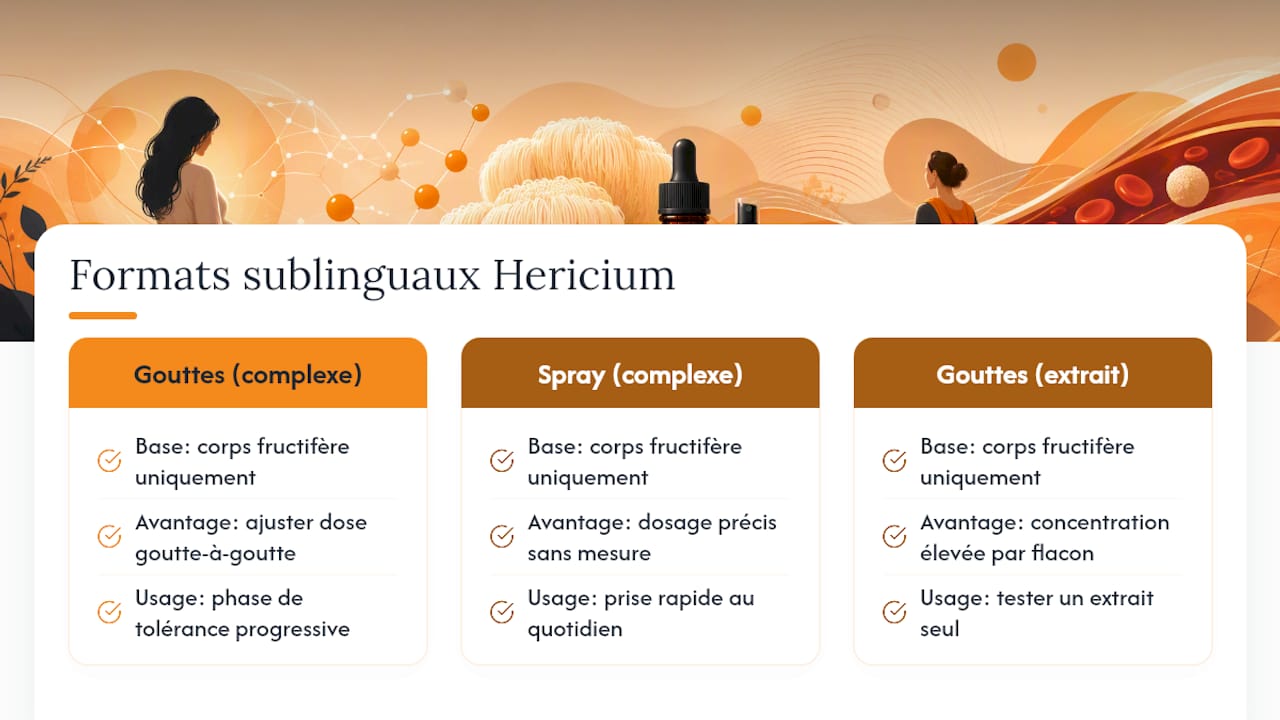
Once precautions are in place, the practical question remains: how to take Hericium without unnecessary complications? Pure Croft offers liquid extracts and sublingual sprays formulated exclusively from the fruiting body, without mycelium or additives, designed for direct absorption under the tongue.
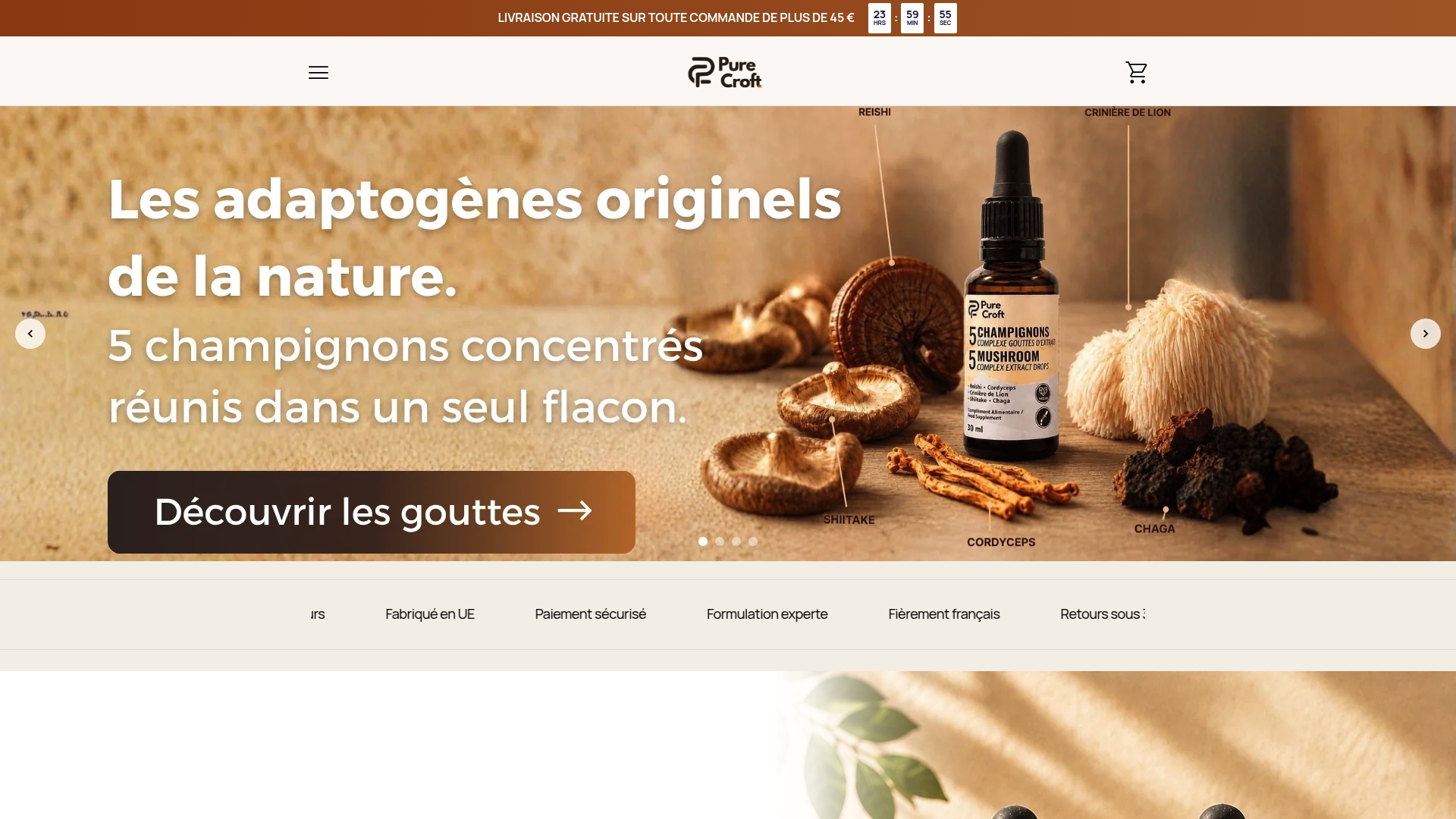
The 5-mushroom complex in drops combines lion’s mane with four other functional mushrooms in a concentrated formula, ideal for those who want to adjust the dose drop by drop during their progressive tolerance phase. For quicker daily intake, the 5-mushroom complex spray offers precise dosing without measuring or preparation. If you prefer to discover an extract alone first before moving to a complex, the Reishi extract drops clearly illustrate our logic of high concentration per bottle.
The high-density formulation derived from the fruiting body aims for better bioavailability than mycelium-based extracts, which can also limit the amount needed per dose, a relevant point when trying to minimize doses during the tolerance testing phase. Consult the full range of functional mushroom drops to compare formats, and speak to your doctor if you fall into any of the at-risk categories mentioned above before placing an order.
More on Hericium safety
To explore the scientific data mentioned in this article in greater depth, consult the primary sources directly: the landmark clinical study on Hericium tolerance, research on platelet aggregation, the review on neurotrophic effects, the analysis of respiratory reactions to fungal powders, and safety reviews on medicinal mushrooms. To place Hericium among other functional mushrooms, our article on Chaga and its synergies provides useful additional reading.
Sources
- PubMed: clinical study on Hericium (landmark)
- PMC article on fungal compounds and platelet aggregation
- PMC review on neurotrophic effects of Hericium
- PubMed: respiratory reactions to fungal powders
- PMC: safety reviews on medicinal mushrooms
