

Have you noticed this small succulent with yellow flowers and a fragrant rhizome that appears on the rocks of mountain ranges? Here is everything you need to know about roseroot, from its botanical identity to its uses, as well as the best way to grow it at home.
What is roseroot? Name, family, and characteristics
Roseroot, known scientifically as Rhodiola rosea, belongs to the Crassulaceae family. It is a hardy perennial plant that generally measures between 15 cm and 40 cm in height. Its stems are upright, its leaves are thick and fleshy, and its small greenish-yellow flowers form dense corymbs in early summer.
It grows naturally in the temperate regions of Europe and Asia, from the Caucasus to China and Japan. The blackish rhizome, which gives off an odor reminiscent of rose, hence its name, is the part most sought after for medicinal purposes.
The name of the related genus Sedum, to which roseroot belonged for a long time, comes from the Latin sedere, "to sit," because these plants cling to rocks as if they were settling there.
The plant has a life cycle that includes the division of clumps and reproduction by seeding. It tolerates freezing temperatures well, even below -15°C, but it is sensitive to overly moist soil.
How to identify roseroot in the wild
The first clue is the shape of the leaf: it is oval to lanceolate, often slightly toothed towards the end, and the leaves are crowded all along the stem. Bluish-green, they sometimes turn red at the edges.
The stems, meanwhile, are thick, without lateral branching, and bear at their top a dense corymb of small yellow flowers, sometimes tinged with red. The flowers generally have four petals and eight stamens that stand out clearly.
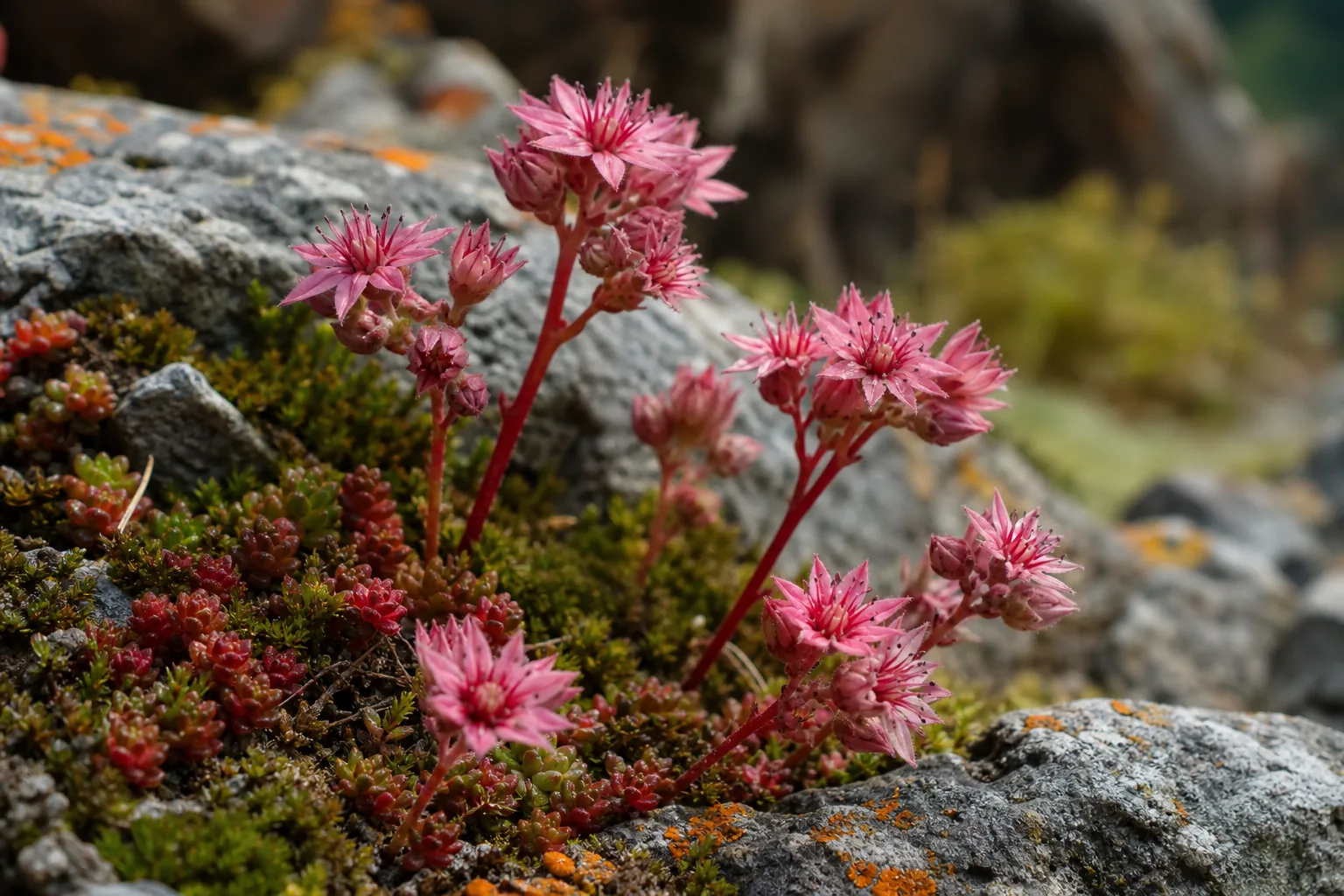
The plants grow in poor, often calcareous or siliceous soils and prefer sunny exposures. They are frequently observed on cliffs, scree, and mountain slopes where plant competition is low.
For amateur gardeners, identification relies on its fleshy leaves crowded along unbranched stems, its yellow flowers that appear from June to August, and its rose-scented rhizome.
By observing the characteristics above, you will be able to distinguish roseroot from neighboring species like Sedum acre (a creeping plant with much smaller leaves) or Hylotelephium telephium (less fleshy leaves).
If you want to delve deeper into the benefits of our adaptogenic mushrooms, discover our functional mushrooms, another family of ingredients often described as adaptogenic.
Natural habitat, flowering, and ecological role
Roseroot is mostly found in alpine mountains, the Pyrenees, and sub-arctic zones. It prefers altitudes of 1,200 to 2,800 m, where soils are well-drained and the climate is cold and dry.
Flowering generally extends from June to August. The corymbs of yellow flowers attract bees and other pollinating insects.
Ecologically, as a honey plant, it supports mountain pollinators.
For growers concerned about biodiversity, planting roseroot in a rock garden enriches the garden while feeding beneficial insects.
Growing roseroot in the garden: soil, exposure, and care
The ideal soil is light, well-draining, and poor in organic matter. A mix of coarse sand, gravel, and a little garden soil works very well. Avoid clay soils that retain water; excess moisture causes crown rot.
The exposure must be in full sun, at least six hours of direct light per day. In partial shade, flowering remains shy and the stems can stretch, losing their compact shape.
For planting, create a hole slightly wider than the root ball, place the plant level with the ground, and water thoroughly to remove air pockets. During the first three to four weeks, keep the soil slightly moist to encourage rooting.
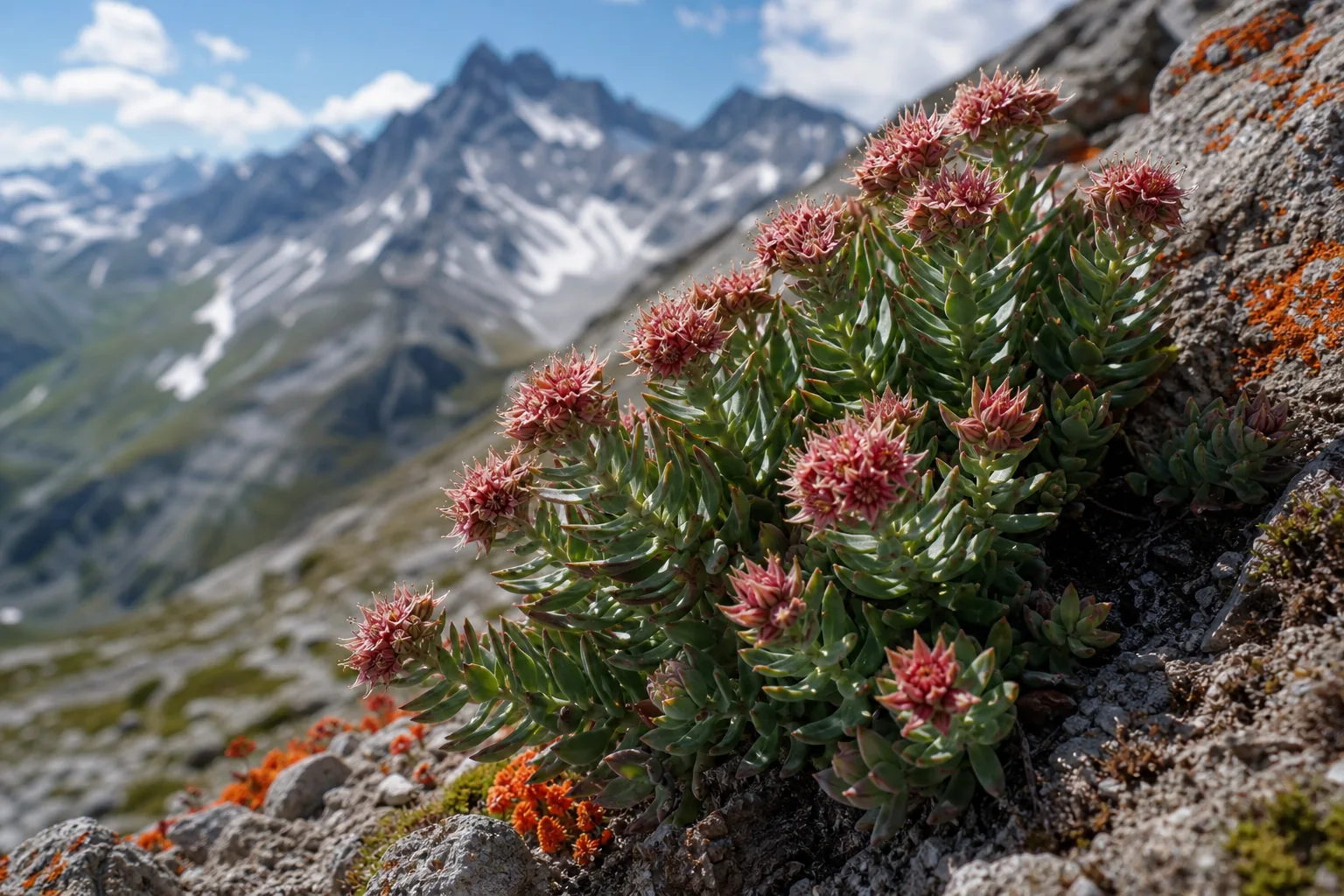
Once established, roseroot requires very little watering. In mid-summer, water only during long periods of drought. In winter, no irrigation is necessary.
Clump division is done in spring or autumn. Carefully dig up the clump, separate the parts with a clean knife, then replant immediately in well-drained soil.
In a pot, choose a substrate of 1/3 poor potting soil, 1/3 sand or perlite, 1/3 gravel. Good drainage at the bottom of the pot avoids the risk of rot.
For gardeners who wish to combine well-being and gardening, our 5-mushroom complex drops complement a routine focused on so-called adaptogenic plants and mushrooms well.
Traditional uses and precautions: distinguishing facts from promises
For centuries, the peoples of the Urals, the Carpathians, and Scandinavian regions have used roseroot to fight fatigue and stress. The root, rich in rosavin and salidroside, is being studied for its possible role in the body's response to stress.
Several clinical studies, often small in scale, suggest that standardized extracts could reduce the feeling of fatigue in adults under stress, but the evidence remains limited.
In herbal medicine, 200 to 600 mg of standardized extract per day is generally recommended, taken in the morning or early afternoon. Intake in the evening should be avoided, as it can disrupt sleep.
Precautions are important: pregnant women, people suffering from bipolar disorder, and those on anticoagulants should consult a healthcare professional before using roseroot. Side effects are rare, but overdose can cause nervousness or palpitations.
For enthusiasts of mushroom-based supplements, our complete range offers mushroom extracts in sublingual spray and drop form.
In summary, roseroot offers interesting adaptogenic support, but it does not replace medical supervision. Always check the rosavin content on the label and choose suppliers who test their raw materials.
Frequently asked questions about roseroot
Which part of the plant is used in herbal medicine?
The root, called the rhizome, is the part richest in rosavin and salidroside, the two main active compounds.
Can roseroot be consumed as an infusion?
Yes, you can prepare an herbal tea with the dried root; let it infuse for 5 to 10 minutes before drinking.
What daily dosage is recommended for a healthy adult?
In herbal medicine, 200 to 600 mg of standardized extract per day, taken in the morning, is generally cited. Seek the advice of a healthcare professional before starting.
Is roseroot safe for children?
It is not recommended for children under 12 years of age without medical advice, as efficacy and safety data are limited.
How do I know if my extract is of good quality?
Check that the product clearly indicates the percentage of rosavin and that it comes from a certified source, ideally with purity tests performed by an independent laboratory.
Conclusion
If you are looking for a hardy plant with adaptogenic properties, roseroot deserves your attention; plant it in well-draining soil, expose it to full sun, and keep in mind that its traditional uses do not replace medical advice.
Want to go further? Discover the 5-mushroom complex spray from Pure Croft.
